
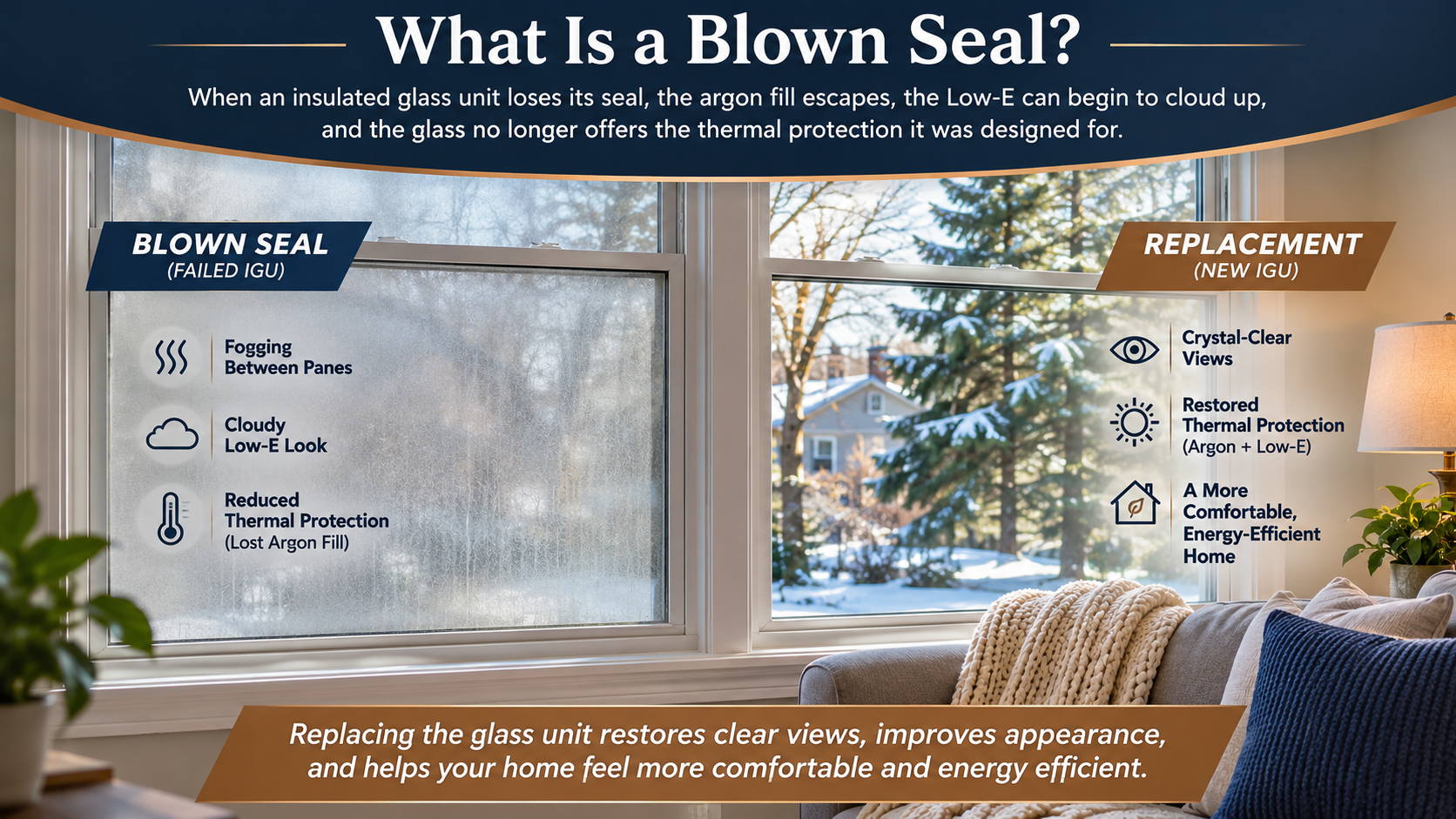
What Is a Blown Window Seal? Signs, Causes, and Why Insulated Glass Replacement Matters
Have you noticed a cloudy appearance, fogging, or moisture trapped between the panes of your windows? You may be dealing with what is commonly called a blown window seal. While it might initially seem like a cosmetic problem, a failed window seal can affect much more than the appearance of your home.
Modern insulated glass units are designed to provide clear views, reduce heat transfer, and help maintain comfortable indoor temperatures. When the seal fails, the glass unit can gradually lose the insulating properties that made it energy efficient in the first place.
At Alta Window and Door, we help homeowners in Sandy, Utah, and surrounding communities restore their windows with professional insulated glass replacement.
What Is a Blown Seal in an Insulated Glass Unit?
Most modern residential windows contain an insulated glass unit (IGU) consisting of two or more panes of glass separated by a sealed space. This space often contains argon gas, an insulating gas that helps reduce heat transfer through the window.
Many insulated glass units also feature a Low-E (low-emissivity) coating, a microscopically thin layer designed to reflect radiant heat while allowing natural light to enter the home.
The perimeter seal keeps the insulating gas inside and prevents outside moisture from entering the space between the panes.
When that seal deteriorates or fails, the insulated glass unit is no longer airtight. Argon gas can escape, and moisture-laden air can enter.
This condition is commonly referred to as a blown seal or failed insulated glass unit.
Why Does a Blown Seal Cause Cloudy or Foggy Glass?
One of the most recognizable signs of a failed glass seal is condensation or a cloudy appearance between the glass panes.
When moisture enters the sealed space, it can collect on the interior glass surfaces. Over time, this moisture can leave mineral deposits, staining, or a persistent haze that cannot be cleaned from either side of the window.
In some insulated glass units, prolonged moisture exposure can also contribute to deterioration or corrosion of the Low-E coating, creating additional cloudiness or discoloration.
The result is a window that looks dirty, fogged, or permanently cloudy even after the interior and exterior surfaces have been thoroughly cleaned.
Unfortunately, once moisture is trapped inside the glass unit, normal window cleaning will not solve the problem.
The Hidden Problem: Losing Argon Gas and Thermal Protection
Although cloudy glass is often the first problem homeowners notice, the more important concern may be the loss of insulating performance.
Argon gas is commonly used between insulated glass panes because it transfers heat less readily than ordinary air.
When the perimeter seal fails, argon can gradually escape and be replaced by outside air. This reduces the insulating benefit the glass unit was originally designed to provide.
A blown seal can result in:
- Reduced thermal efficiency: Heat can transfer more readily through the glass.
- Less comfortable rooms: Interior glass temperatures may become less favorable during hot summers and cold winters.
- Increased heating and cooling demands: Your HVAC system may need to work harder to maintain comfortable indoor temperatures.
- Low-E coating deterioration: Moisture exposure can damage certain Low-E coatings and compromise their performance.
- Permanent cloudiness: Fogging, staining, or haze can obstruct your view and diminish your home’s appearance.
A failed seal does not necessarily mean that all insulating performance disappears immediately. However, the unit can no longer be relied upon to deliver its original rated performance.
For Utah homeowners, where summer temperatures can be high and winters can be freezing, maintaining properly insulated glass is especially important.
Can a Blown Window Seal Be Repaired?
Some services advertise methods for removing fog or moisture from failed insulated glass units. These processes may improve the appearance temporarily, but they typically do not restore the original factory seal, argon gas concentration, or Low-E coating condition.
The most dependable long-term solution is replacing the failed insulated glass unit.
Fortunately, this does not always mean replacing the entire window.
When the existing window frame and sash are in good condition and are designed to accept replacement glass, the failed insulated glass unit can often be removed and replaced while retaining the surrounding window components.
This makes insulated glass replacement an attractive option for homeowners who are otherwise satisfied with their existing windows.
How Insulated Glass Replacement Restores Your Home
Replacing a failed insulated glass unit can deliver improvements you can both see and feel.
1. Restore Clear, Beautiful Views
Cloudy glass can make an otherwise attractive home look dated or poorly maintained. New insulated glass restores a clear view of the outdoors and allows natural light to enter without the distraction of fogging or trapped moisture.
2. Restore Thermal Insulation
A properly manufactured replacement insulated glass unit can include modern Low-E glass and argon gas fill to improve resistance to heat transfer.
This helps reduce unwanted heat gain during Utah’s hot summers and heat loss during cold winter months.
3. Improve Indoor Comfort
Properly insulated glass helps maintain more comfortable interior glass temperatures.
Homeowners may notice fewer cold spots near windows during winter and less unwanted radiant heat entering their rooms during summer.
4. Maintain the Appearance of Your Existing Windows
If your existing window frames are structurally sound, replacing only the insulated glass units can preserve the original appearance and architectural character of your home.
5. Support Better Energy Efficiency
By restoring properly sealed, insulated glass, homeowners can improve window thermal performance and potentially reduce unnecessary heating and cooling demands.
The actual energy savings depend on the existing windows, replacement glass specifications, climate, and other home conditions.
When Should You Replace a Failed Insulated Glass Unit?
If you notice persistent fogging between panes, visible moisture, cloudy glass, or discoloration that cannot be cleaned away, it may be time to consider replacement.
Even when the glass is not visibly damaged, seal failure can affect the insulating performance of the window.
Addressing the problem sooner can help restore your home’s appearance and maintain a more comfortable living environment.
Insulated Glass Replacement in Sandy, Utah
At Alta Window and Door, we understand that homeowners want windows that look beautiful while providing dependable thermal protection.
Our insulated glass replacement services offer a practical solution for failed glass seals without automatically requiring complete window replacement.
Whether you have one cloudy window or several insulated glass units showing signs of failure, we can help evaluate your existing windows and determine the appropriate replacement solution.
Restore your view. Improve your comfort. Bring back the thermal protection your windows were designed to provide.
Contact Alta Window and Door to learn more about insulated glass replacement in Sandy, Utah, and surrounding communities.